The badminton scoring system might undergo the biggest change in decades, altering how the game is played, watched, and won. The 3×15 scoring system is a proposed format that replaces the traditional 3×21 structure with shorter, faster, higher-pressure sets of just 15 points.
The Badminton World Federation (BWF) 3×15 scoring proposal changes the format of competitive matches. You need to understand this change if you are a competitive player trying to grasp how tactics shift, a coach rethinking training plans, or simply a badminton fan curious about where the sport is heading. This blog breaks down exactly how the 3×15 system works, how it stacks up against the current 3×21 format.
The 3×15 badminton scoring system is a proposed alternative match format featuring 15-point games instead of the current 21, while retaining the best-of-three structure. The core idea is to make the game simpler and faster, with tighter margins and greater pressure on every rally.
The 3×15 system follows the same rally point system as the existing format. Either side can win a point on any rally, regardless of who served. What changes is the target score to win each game.
A match under the 3×15 format is played as a best-of-three games, with each game won by the first player or pair to reach 15 points. To win the match, a player must win two games. If the match goes to a deciding third game, it is also played to 15 points with no reduction in the final set. The reduced points target makes each point more significant.
Service rules under the 3×15 format remain largely unchanged from the existing BWF regulations. The player or pair that wins a rally earns the point and gains the right to serve next. One area of ongoing discussion is whether to retain the service fault rules and low-service line regulations introduced by BWF in 2018. BWF trial discussions have generally focused on keeping the format familiar for players transitioning from the standard game, while primarily adjusting the points structure.
Yes, in the 3×15 proposal, the deuce equivalent would apply at 14-all, requiring a player to win by two clear points, up to a maximum of 17. This is still one of the most debated aspects of the proposed format. Some trial versions of the format have experimented with a sudden-death rule at 14-all, where the next point decides the game outright. This variation significantly increases the pressure of the final point and has drawn both praise for its drama and criticism for being too abrupt.
The 3×15 proposal is the product of years of internal pressure within the BWF. It is driven by three converging forces: broadcasting demands, declining viewership trends, and the global push to make racket sports more television and digital-friendly.

No, as of April 2026, the 3×15 scoring system has not been officially adopted by the BWF as the standard format for its sanctioned events. It remains a proposal under active evaluation, with BWF conducting structured trials at selected events to gather performance data, player feedback, and broadcast metrics. BWF leadership has publicly acknowledged the need to evaluate the format's viability.
The last major structural shift, from a 15-point service-based system to the 21-point rally point system, was introduced in 2006 after years of trials and significant internal debate. That change was itself controversial at the time, with many traditionalists arguing that it altered the game's strategic depth.
Badminton has used the 3×21 system as its official standard since 2006, but the 3×15 proposal is now putting every aspect of that format under the microscope. The two systems share the same court, shuttle, and best-of-three structure, yet they produce a noticeably different game. Here is exactly how they differ:
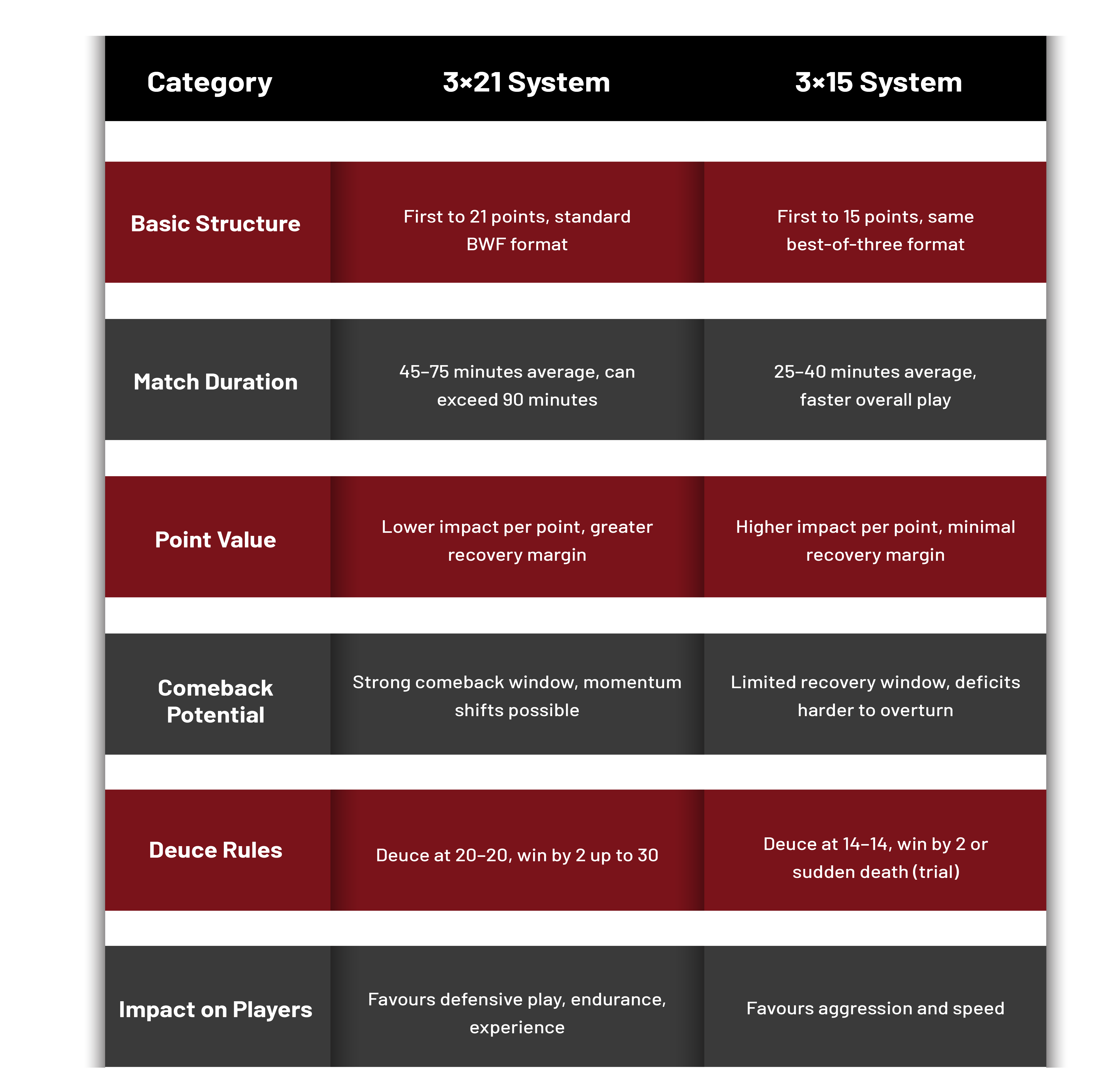
Both formats follow the same best-of-three match structure. You still need to win two games to take the match. The only change is the number of points needed to win each game.
That six-point difference can reshape the entire match.
This is the most obvious difference.
This is where the two formats feel most different in actual play.
The shorter the game, the heavier each individual point becomes. There is simply less room to absorb a bad spell and fight back.
The 3×15 format feels more consistently intense, but it also reduces the likelihood of dramatic reversals that many fans consider the sport's best moments.
The sudden death variation dramatically raises the stakes of every point leading up to 14-all, but it also removes the grinding, two-point battle that fans of the longer format value deeply.
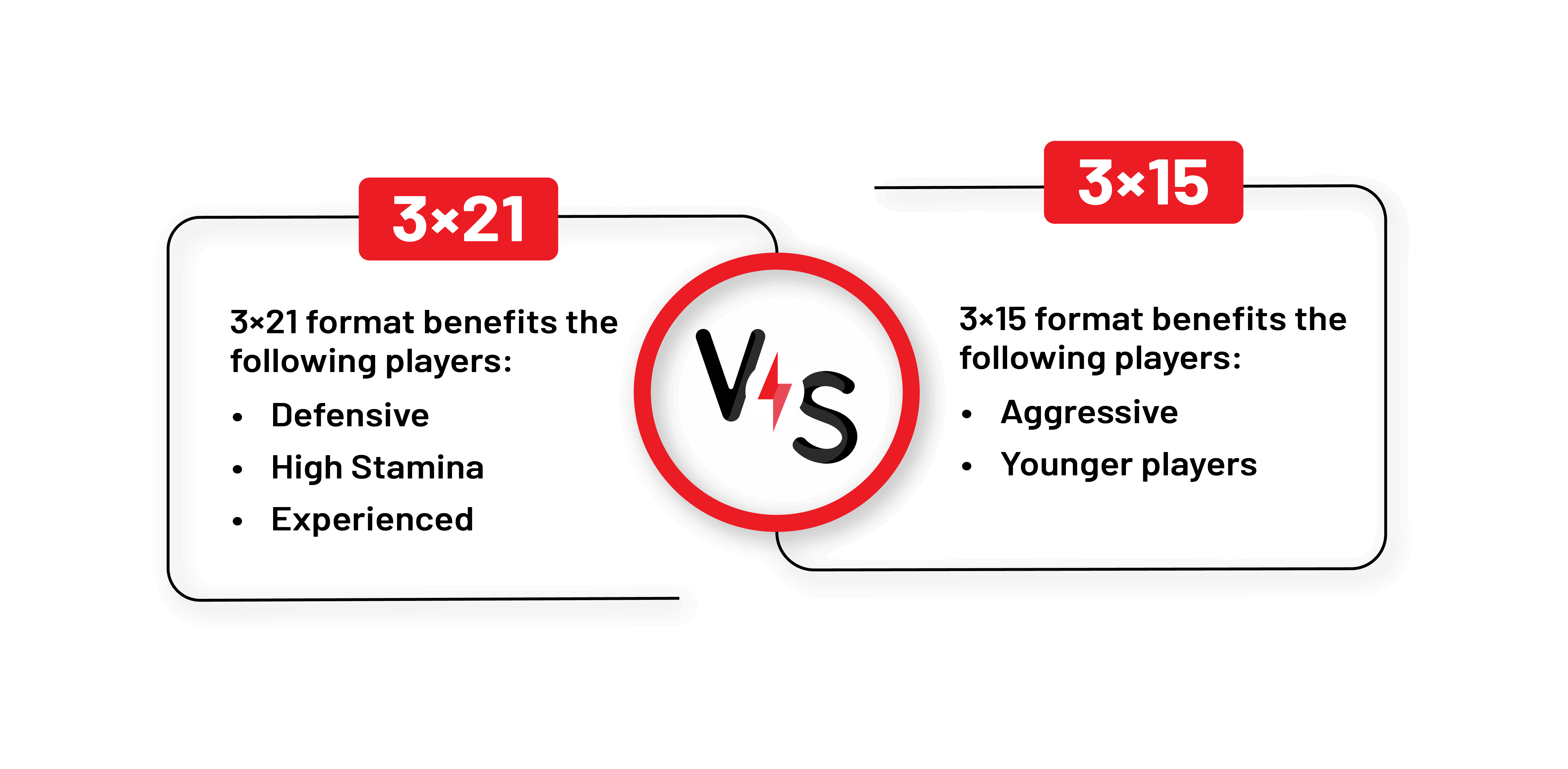
This is one of the most significant debates over competitive fairness between the two formats.
Before strategy shifts and formats evolve, master how the game is truly played at its core.
Level Up Your GameThe 3×21 system has defined badminton for nearly two decades, and changing it is no minor decision. However, the 3×15 proposal is a serious structural response to real pressures like shorter broadcast windows, younger audiences, and the need for the sport to grow beyond its traditional fanbase. One thing is clear: how badminton is scored under the 3×15 scoring system is no longer a settled question.