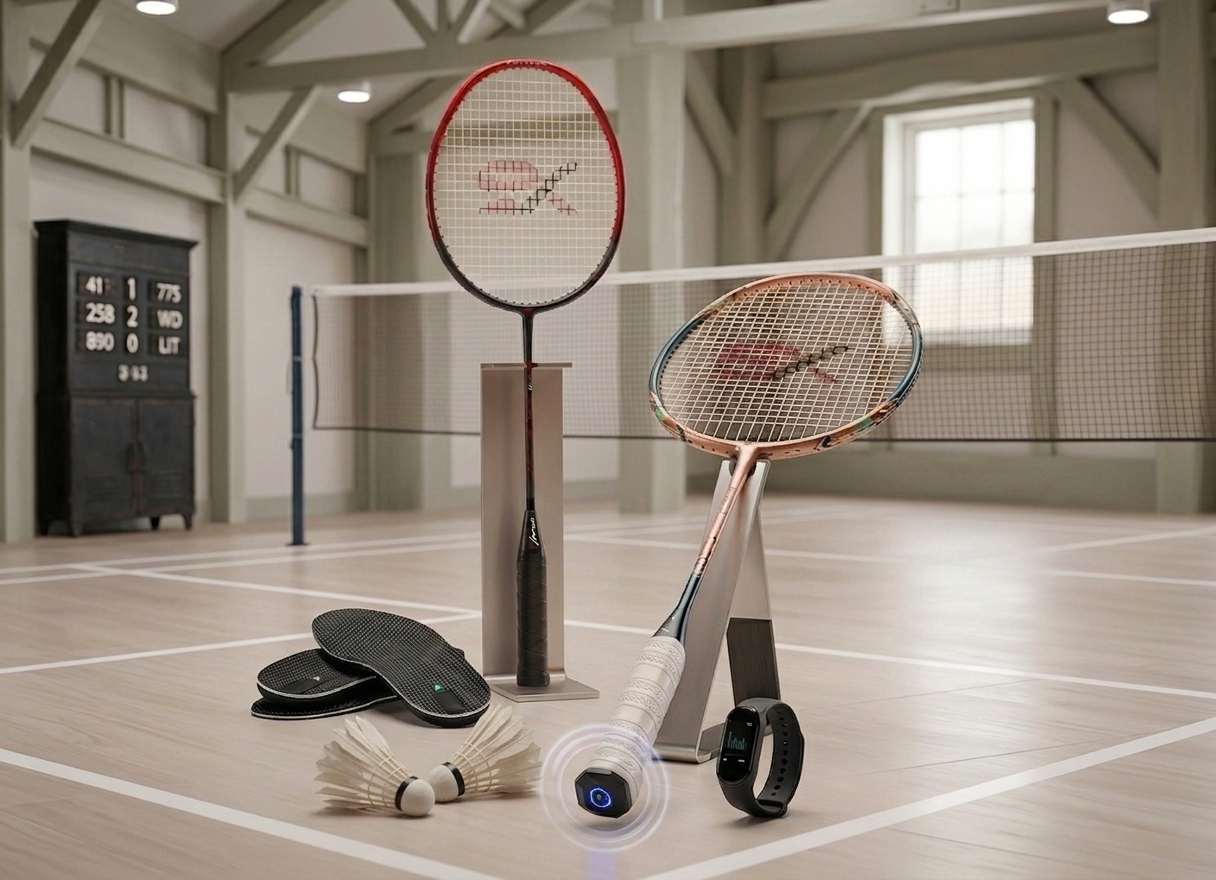
A badminton video analysis helps players identify patterns and spot their mistakes. Through this, they will be able to make tactical decisions. Analysing previous games opens a learning opportunity by reviewing rallies, shot selection, and movement, helping improve the overall game.
Badminton video and statistical analysis help players gain a clearer picture of their strengths and areas that need attention. Structured badminton game analysis allows players to revisit real moments such as missed smashes, weak returns, slow recovery, or predictable play, and understand what led to those outcomes.
Badminton performance analysis is becoming more accessible through simple recording tools and emerging analytics. Players at every level can adopt this informed approach to training. You will be able to review your gameplay consistently and track progress, refine technique, and improve decision-making on the court.
Video analysis is essential in badminton because it helps players see their actual performance rather than relying on memory. When you watch your own match, you can clearly notice mistakes that are often missed during fast gameplay.
For example, you may realise that your footwork is slow, your shots are inaccurate, or your positioning is incorrect. This clear visual feedback makes it easier to understand what is going wrong and what needs improvement.
It also helps players learn faster and improve their skills more effectively. By watching videos, you can study your strengths and weaknesses and work on them step by step. It also helps you understand your opponent’s style and develop better strategies for future matches.
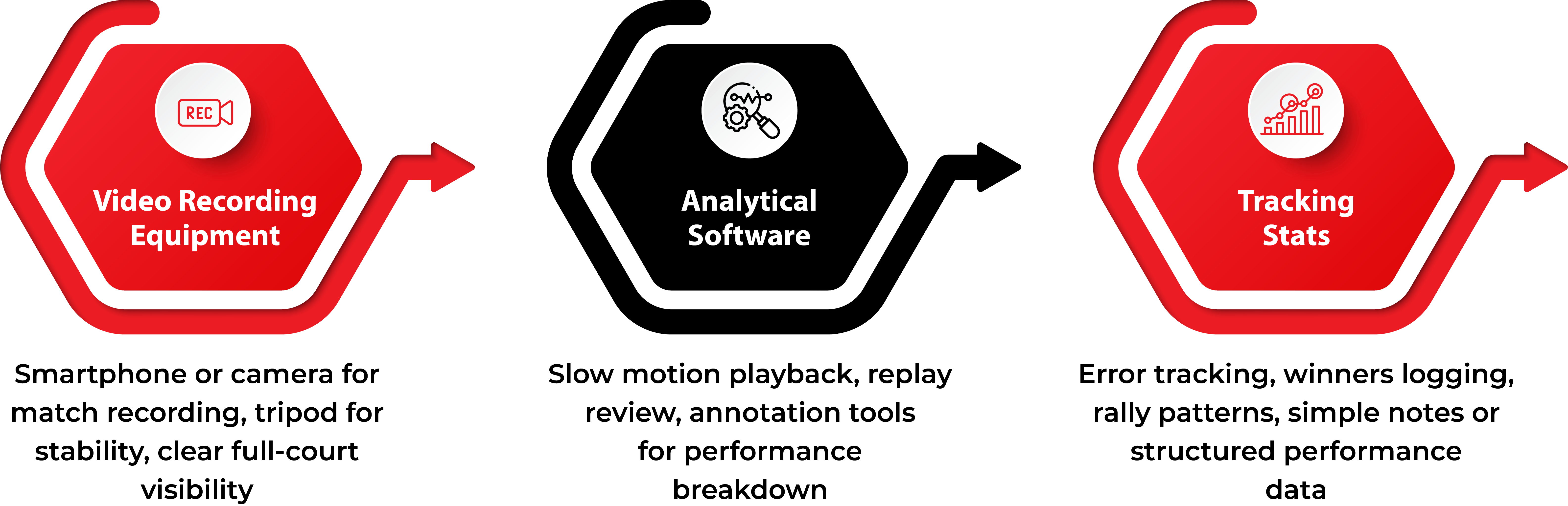
To analyse your badminton performance properly, you need a few simple tools that help you record, review, and track your game. These tools do not have to be expensive or complicated. Even basic equipment can let you analyse your strengths and weaknesses.
The first and most important tool is a device to record your matches. A smartphone is usually enough for beginners because it can record good-quality videos and is easy to use. A camera can also be used if you want higher video quality or more stable recording.
A tripod is very useful because it keeps the camera steady and allows for stable full-court recording. Positioning also matters a lot. Try placing the camera at a higher angle or at the side of the court so you can clearly see movement, footwork, and shot direction.
Once you have recorded your match, you need tools to review it properly. Basic apps allow you to play, pause, and replay your video, which is enough for beginners. More advanced tools offer additional features such as slow motion, drawing tools, and video tagging.
When choosing an app, look for features such as slow-motion playback to study fast movements, annotation tools to mark mistakes or successful shots, and easy replay options to review key moments repeatedly. These features help you break down your performance in detail and understand what is happening during each rally.
Along with video analysis, tracking your stats is very helpful. You can use a simple notebook to write down important points like errors, winners, or rally lengths. This is a quick and easy method for beginners.
If you want more organised data, you can use spreadsheets or mobile apps. These allow you to store and compare your performance over time. Simple tracking is good for beginners, but detailed tracking helps advanced players find patterns in their game, such as repeated mistakes or weak areas.
Learn more about Choosing the Right Badminton Grip for Better Control
Recording your badminton matches correctly is the first step towards effective performance analysis. Good quality and well-positioned footage make it much easier to review your game and identify areas for improvement.
Read more A Comprehensive Guide to Choose the Right Badminton Racket
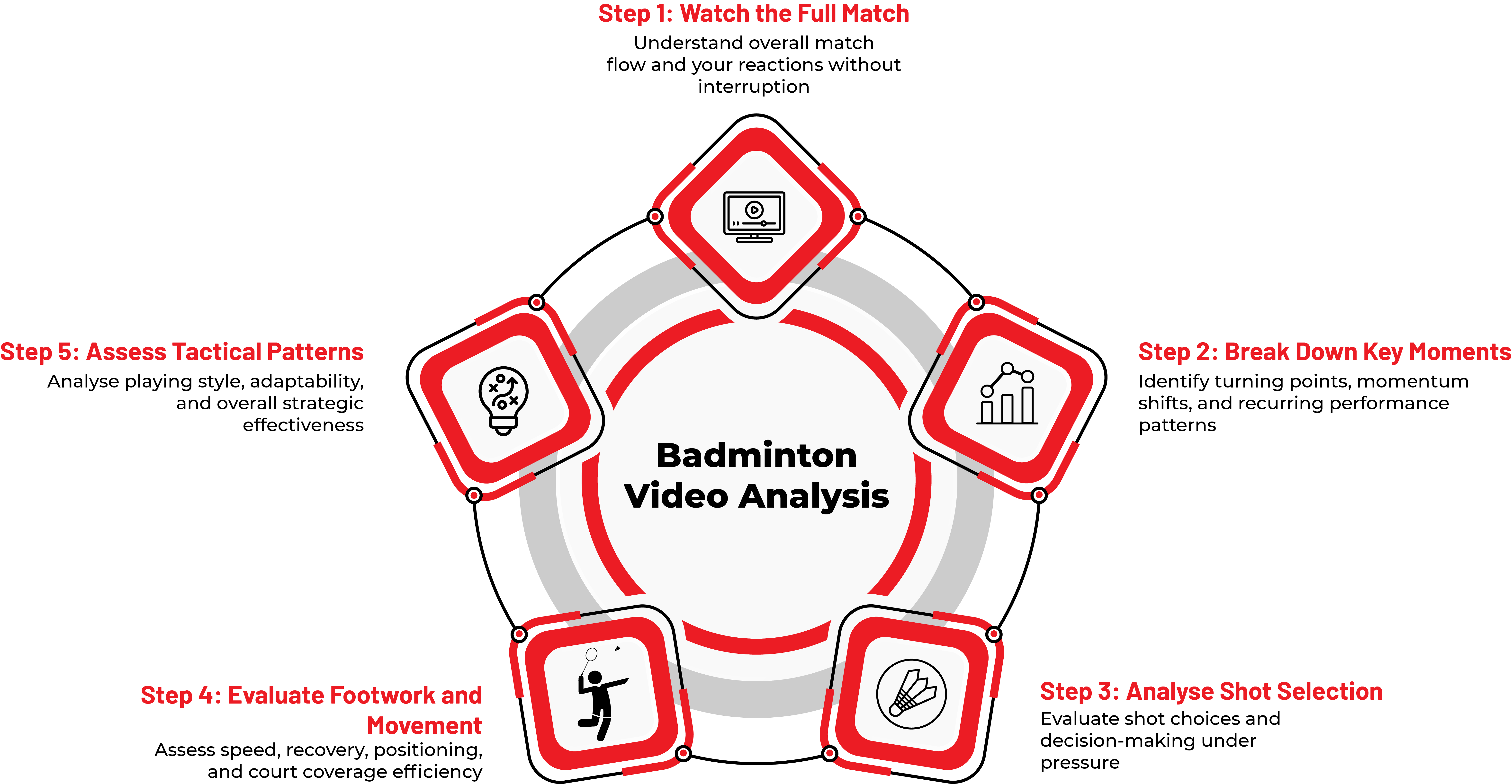
A structured approach to badminton video analysis helps players turn raw match footage into clear, actionable insights. Instead of watching casually, each review should have a purpose so that small details in the performance are not missed.
Start by watching the entire match from beginning to end without pausing or criticising your performance. The goal at this stage is to understand the overall flow of the game. Pay attention to how the match progresses and how you respond in different situations. This first viewing gives you a broad picture of your performance before focusing on specific details.
After the first watch, go back to the same match and identify the most important moments. These could be long rallies, turning points, missing points or situations where the momentum changed. Focus on both mistakes and successful sequences. Identify patterns such as repeated errors under pressure or points where you consistently gain an advantage. This step highlights what is shaping the outcome of the match rather than isolated incidents.
Analyse the quality of your shot choices, including smashes, drops, clears, and defensive returns. Justify how your specific shot is the best choice in that situation. A key part of badminton performance analysis is understanding decision-making under pressure. Often, players lose points just because they choose the wrong shot at the wrong time despite having good technique. Review these moments and improve tactical thinking during future matches.
Footwork is one of the most important factors in badminton performance. It is important to analyse how quickly and efficiently you move around the court, how well you recover after each shot, and whether your positioning puts you under unnecessary pressure. Poor recovery or slow movement often leads to weak returns and lost points. Improving speed, balance, and court coverage through badminton video analysis can significantly improve overall performance.
In the end, identify your playing style, whether it's offensive or defensive, and how effectively you adapt to your opponent. Strong badminton analytics helps reveal whether your strategy is flexible or easy to read. If you are playing predictable shots, adjust your game plan and adopt more varied, effective tactics in future matches.
Turn insights into action. Upgrade your training with equipment designed to sharpen speed, precision, and match intelligence.
Start Smart TrainingBadminton video analysis and performance tracking are powerful tools for continuous improvement. You can understand your strengths and weaknesses by reviewing match footage, studying statistics, and identifying patterns in your game. This process helps you make better decisions, improve technique, and develop stronger tactical awareness on court. Players at any level can track their progress through regular game analysis. Small, consistent improvements from these analyses lead to long-term development and more confident performances in matches.